Modern organizations are under increasing pressure to unify, manage, and activate customer data across dozens of digital and offline touchpoints. Customer Data Platforms (CDPs) have emerged as the backbone of data-driven marketing and customer experience strategies, with Segment being one of the most recognizable players in the space. However, many companies are now evaluating products like Segment CDP for customer data platform management to better match their scale, compliance requirements, technical architecture, or budget.
TLDR: Several enterprise-grade and mid-market alternatives to Segment offer robust customer data platform capabilities, including real-time data ingestion, identity resolution, activation, and governance. Leading competitors such as mParticle, Tealium, Bloomreach, Salesforce Data Cloud, and Adobe Real-Time CDP provide differentiated strengths in integration, analytics, and personalization. Choosing the right solution depends on organizational complexity, data maturity, privacy needs, and integration requirements. A structured evaluation of features, scalability, and cost is essential before committing to a platform.
A CDP is not simply a data warehouse or analytics tool. It is a centralized system that collects customer data from multiple sources, resolves identities into unified profiles, and enables activation across marketing, sales, and service channels. As privacy regulations evolve and personalization expectations intensify, organizations must choose CDP solutions that are secure, scalable, and strategically aligned with their digital ecosystem.
What to Look for in a Segment Alternative
Before examining specific products, it is critical to understand the core capabilities that define enterprise-grade CDP management:
- Data Collection: SDKs, APIs, and server-side ingestion across web, mobile, CRM, and offline systems.
- Identity Resolution: Deterministic and probabilistic matching to unify customer profiles.
- Real-Time Processing: Immediate data availability for triggers and personalization.
- Audience Segmentation: Dynamic segment creation based on behavioral and transactional data.
- Activation: Native integrations with advertising, email, analytics, and engagement platforms.
- Governance and Compliance: Consent management, data residency, and regulatory controls.
- Scalability: Infrastructure capable of handling enterprise-level data volumes.
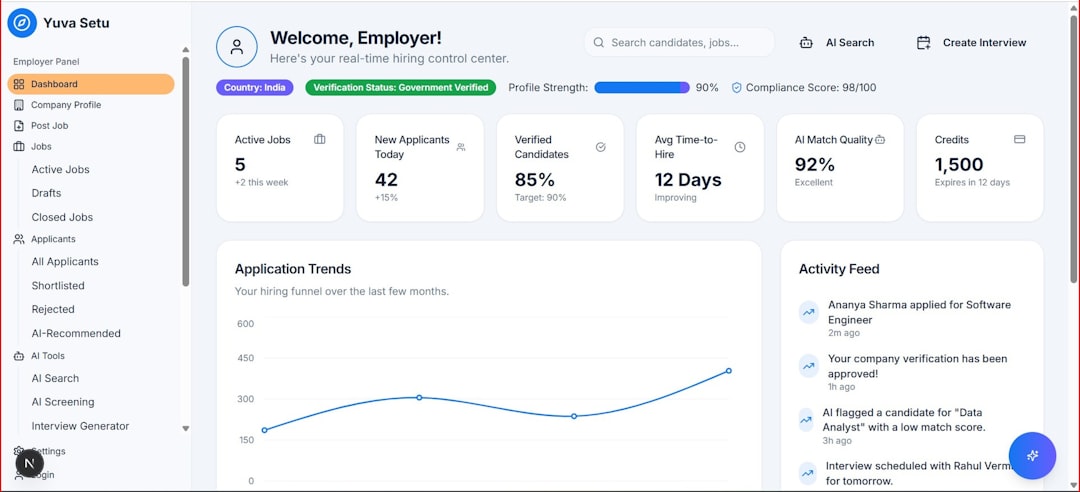
While Segment excels in developer-friendly integrations and event streaming, other platforms may provide deeper native analytics, vertical specialization, or enhanced compliance capabilities.
Leading Products Like Segment CDP
1. mParticle
mParticle is widely regarded as one of Segment’s closest competitors. It focuses heavily on identity management, data governance, and enterprise scalability.
Key strengths:
- Advanced identity resolution engine
- Strong data governance controls
- Extensive integration ecosystem
- Enterprise-focused implementation support
mParticle is often favored by large consumer brands that require strict compliance frameworks and high-volume data processing.
2. Tealium AudienceStream CDP
Tealium offers a mature ecosystem anchored by its tag management system. AudienceStream CDP builds on this foundation to provide real-time customer profiles.
Key strengths:
- Powerful event stream processing
- Native tag management integration
- Predictive machine learning capabilities
- Strong real-time activation
Organizations already using Tealium iQ often find AudienceStream to be a natural extension of their existing stack.
3. Bloomreach Engagement
Bloomreach Engagement positions itself as a CDP with embedded marketing automation and personalization capabilities. It is particularly strong in ecommerce environments.
Key strengths:
- Built-in email and campaign execution
- AI-driven product recommendations
- Strong ecommerce data modeling
This platform may appeal to organizations seeking a unified engagement solution rather than managing multiple disconnected tools.
4. Salesforce Data Cloud
Salesforce Data Cloud (formerly Customer Data Platform) integrates seamlessly into the Salesforce ecosystem. It offers unified profiles across sales, service, and marketing clouds.
Key strengths:
- Deep CRM integration
- Strong B2B and B2C data modeling
- Enterprise compliance and security standards
For companies heavily invested in Salesforce, Data Cloud reduces integration complexity and enables cross-functional intelligence.
5. Adobe Real-Time CDP
Adobe Real-Time CDP is part of the Adobe Experience Platform and offers strong real-time segmentation and cross-channel activation.
Key strengths:
- Advanced identity graph capabilities
- Tight integration with Adobe Experience Cloud
- Enterprise-grade analytics and personalization tools
It is particularly compelling for organizations that prioritize digital experience optimization at scale.
Comparison Chart of Leading Segment Alternatives
| Platform | Best For | Identity Resolution | Real-Time Capabilities | Native Activation | Ideal Organization Size |
|---|---|---|---|---|---|
| mParticle | Enterprise consumer brands | Advanced | Strong | Extensive integrations | Large enterprises |
| Tealium | Real-time personalization | Strong | Very strong | Broad marketing integrations | Mid to large enterprises |
| Bloomreach | Ecommerce businesses | Moderate to strong | Strong | Built-in engagement tools | Mid-market to enterprise |
| Salesforce Data Cloud | CRM-centric organizations | Advanced | Strong | Native Salesforce ecosystem | Mid to large enterprises |
| Adobe Real-Time CDP | Digital experience leaders | Advanced identity graph | Very strong | Adobe ecosystem activation | Large enterprises |
Architectural Considerations
When evaluating products like Segment CDP, organizations should consider how each platform fits within their broader data architecture. Integration with cloud data warehouses such as Snowflake, BigQuery, or Redshift is increasingly essential. Many modern CDP strategies are shifting toward composable CDP models, where identity resolution and activation layers operate on top of centralized warehouse environments.
Security posture is another primary consideration. Enterprises must ensure:
- Encryption: Data in transit and at rest.
- Role-based access controls: Limiting exposure across teams.
- Audit logs: Tracking data usage and changes.
- Compliance alignment: GDPR, CCPA, HIPAA where applicable.
Composable CDP and the Future of Data Management
A growing number of organizations are exploring composable architectures. Rather than relying on a monolithic CDP, they assemble modular tools:
- Event tracking frameworks
- Cloud data warehouses
- Identity resolution services
- Reverse ETL tools
- Marketing automation systems
Some Segment alternatives now support this hybrid approach, allowing companies to retain control over raw data while still benefiting from managed identity and activation layers.
This trend reflects a broader shift in enterprise IT strategy toward flexibility, vendor optionality, and long-term scalability.
Key Decision-Making Criteria
To ensure long-term success, leadership teams should align on the following questions:
- What level of real-time activation is necessary?
- How complex is our identity resolution requirement?
- Do we prioritize marketing agility or IT governance?
- Is composability more important than ease of deployment?
- What is our projected data growth over the next five years?
A thorough proof-of-concept phase is strongly recommended. CDP migrations are resource-intensive, and implementation can impact customer-facing systems. Executive sponsorship and cross-functional alignment between marketing, IT, and data teams are essential.
Conclusion
The market for products like Segment CDP for customer data platform management is mature and highly competitive. While Segment remains a strong option for event-driven data collection and developer flexibility, alternatives such as mParticle, Tealium, Bloomreach, Salesforce Data Cloud, and Adobe Real-Time CDP offer compelling advantages depending on organizational needs.
There is no universal solution. The optimal platform depends on strategic goals, ecosystem alignment, compliance requirements, and internal technical maturity. Organizations that approach CDP selection with rigorous evaluation criteria and long-term architectural planning will be best positioned to extract meaningful value from their customer data investments.
In an era where customer experience is a decisive competitive differentiator, a well-chosen CDP is not merely a marketing tool—it is a foundational component of enterprise data strategy.